Neck Cancer Surgery on Sitapur Road Lucknow for Neck Lump, Swelling, and Tumour Treatment
A persistent lump or swelling in the neck is not something to ignore. While many neck swellings are benign, a lump that does not resolve within three weeks, increases in size, or presents with symptoms such as voice changes or difficulty swallowing requires prompt evaluation.
Asia ENT Centre provides evaluation and treatment guidance for neck lumps, swelling, and head and neck tumours on Sitapur Road Lucknow . Each case is assessed carefully to understand the nature, origin, and extent of the condition before treatment is planned. Dr. Zakir Alvi, MBBS, MS (ENT), brings 25+ years of post-specialization ENT experience, with a clinical background that includes Jawaharlal Nehru Medical College Hospital, Dammam Central Hospital in Saudi Arabia, a medical college faculty role, and Scott’s ENT Hospital, Lucknow.
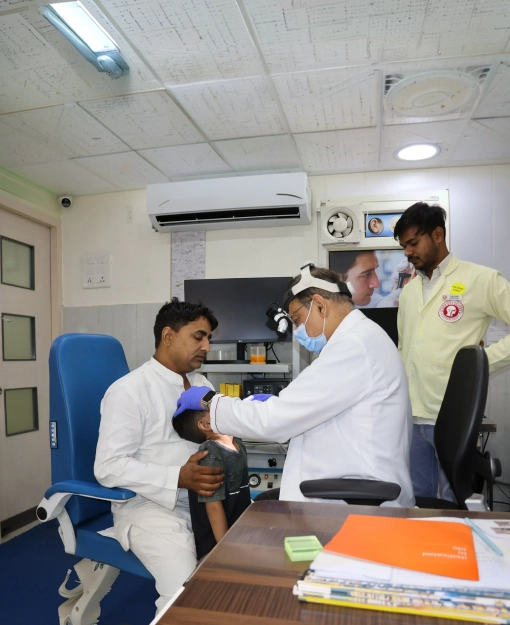
A doctor examining a kid

What Conditions Require Neck Cancer Surgery?

Neck cancer surgery addresses malignant or potentially malignant growths involving the neck, including lymph nodes and surrounding structures. These conditions do not resolve with medication and require targeted surgical management.
A complete diagnostic workup is performed before any surgical recommendation is made. Fine needle aspiration cytology (FNAC) is used to obtain a tissue sample for confirmation. Imaging, such as an ultrasound or CT scan, helps define the location and extent of the condition. Surgery is planned only after the diagnosis is confirmed.
Surgery is recommended when:
Early diagnosis allows better treatment planning and improves outcomes.

What are the Symptoms of Neck Cancer or Neck Lump

Certain features of a neck swelling place it in a higher-risk category and require prompt ENT assessment.
The presence of multiple symptoms increases the urgency of evaluation. Early assessment helps confirm the cause and avoids delay in treatment.
A person touching his throat

Who needs Neck Cancer Surgery?

Surgery is recommended only after the diagnosis is confirmed and the extent of the condition is understood. The most common cases include:

Confirmed Malignant Neck Lump

When FNAC or biopsy confirms malignancy, surgical removal is required to control the disease. Early-stage cases are often managed effectively with surgery alone.

Cancerous Lymph Node Involvement

Cancer spreading to cervical lymph nodes requires systematic removal through neck dissection to prevent further progression.

Primary ENT Tumour Extending to the Neck

Tumours originating in the larynx, pharynx, or nearby structures may extend into the neck and require combined surgical management.

Suspicious but Unconfirmed Neck Mass

When initial tests are inconclusive, an excision biopsy is performed to establish a definitive diagnosis and guide further treatment.

Progression After Non-Surgical Management

Conditions that continue to grow or worsen despite medication require surgical evaluation and definitive treatment.

Types of Neck Cancer Surgery

Each procedure is selected after confirming the diagnosis, ensuring complete removal of affected tissue while preserving function wherever possible.

01 icon

Selective Neck Dissection

In early-stage disease, only high-risk lymph node groups are removed. This targeted surgery controls cancer spread while preserving surrounding muscles, nerves, and function, reducing complications and supporting smoother recovery.

Modified Radical Neck Dissection

For advanced involvement, multiple lymph node levels are removed while preserving key structures like nerves and blood vessels. This approach ensures disease control while minimising long-term functional impact and recovery challenges.

02 icon

Primary Tumour Removal Surgery

The Tumour is surgically removed with clear margins to ensure complete clearance. Planning focuses on preserving essential functions such as swallowing, breathing, and voice while reducing the risk of recurrence.
03 icon

Combined Head and Neck Surgical Procedure

When cancer affects multiple areas, a coordinated surgery removes both the primary Tumour and the involved lymph nodes. This comprehensive approach reduces disease burden and avoids the need for multiple separate procedures.
04 logo

How is Neck Cancer Surgery Performed?

Neck cancer surgery follows a structured pathway to ensure accuracy and safety at every stage.

Clinical Evaluation and Diagnostic Workup

The process begins with a detailed examination of the neck, throat, and oral cavity. Endoscopic assessment is performed where required. FNAC and imaging studies are arranged to confirm the diagnosis and assess the extent.

Diagnosis and Surgical Planning

Once the results are available, the findings are clearly explained. The surgical plan is outlined, including the extent of the procedure and expected outcomes. Surgery is recommended only after complete diagnostic clarity.

Surgical Procedure

Surgery is performed under general anaesthesia in a controlled operating environment. The technique is selected based on the confirmed diagnosis and the extent of the disease.

Post-Operative Monitoring and Recovery

After surgery, monitoring is planned according to the procedure and patient condition. Wound care, nutrition, and recovery instructions are explained clearly, and follow-up visits help track healing and guide further treatment if required.

Neck Cancer Surgery Recovery Timeline

Stage

Timeline

What to Expect

Hospital Stay

2 to 5 days

Monitoring for recovery, wound care, and initial healing support under medical supervision

Initial Recovery

2 to 3 weeks

Mild swelling, discomfort, and limited movement gradually improve with medication and care

Return to Routine

3 to 4 weeks

Most daily activities can be resumed based on recovery progress and the doctor’s advice

Complete Healing

6 to 8 weeks

Tissue healing stabilises, and normal function improves with follow-up monitoring

Cost of Neck Cancer Surgery on Sitapur Road Lucknow

The cost depends on the diagnosis, stage, and type of surgery required. A clear written estimate is provided upon completion of the diagnostic workup.

Procedure

Estimated Cost

Consultation & Evaluation

₹500 – ₹2,000

FNAC & Diagnostic Imaging

₹5,000 – ₹20,000

Selective Neck Dissection

₹80,000 – ₹1,80,000

Modified Radical Neck Dissection

₹1,20,000 – ₹2,50,000

Tumour Removal Surgery

₹1,00,000 – ₹3,00,000

Combined Surgery

₹1,50,000 – ₹4,00,000

Testimonials

Rated as one the best ENT Doctors in Lucknow

atul kr S. profile picture
atul kr S.
2 years ago
Dr Zakir Alvi is a sweet and down-to-earth person.He treats his patients nicely and is a expert in his profession. I highly recommend him if you have any ENT related issues.
Sunil S. profile picture
Sunil S.
6 years ago
We came here for vaccination.The hospital was neat and clean with positive energy.The staff was well behaved and very cooperative.

Why Choose Asia ENT Centre for Neck Cancer Surgery on Sitapur Road Lucknow ?

Neck cancer surgery requires precise diagnosis, careful treatment planning, and structured follow-up. At Asia ENT Centre, patients receive focused ENT assessment and guidance under Dr. Zakir Alvi, with diagnostic evaluation arranged before any treatment decision is made.

25+ Years of ENT Experience

Dr. Zakir Alvi, MBBS, MS (ENT), has 25+ years of post-specialization experience in ENT care, including evaluation of throat, laryngeal, neck, and head-and-neck concerns across different patient profiles.

Specialised ENT and Head & Neck Evaluation

Experience in treating throat, laryngeal, and neck conditions supports a focused approach to tumour evaluation, with treatment planning based on the exact location, diagnosis, and extent of the condition.

Structured Diagnostic Protocol Before Surgery

FNAC, imaging studies, and endoscopic evaluation are completed before any surgical decision is made. This ensures treatment is based on confirmed diagnosis, not assumptions.

Advanced Endoscopy-Based Evaluation

Detailed visualisation of the throat and surrounding structures helps identify the primary source of the condition and guides precise surgical planning.

Dedicated ENT Care Centre

The centre provides focused ENT care for ear, nose, throat, voice, airway, and neck-related concerns, with appropriate examination, diagnostic support, and follow-up guidance.

24Ă—7 ENT Care Support on Sitapur Road Lucknow

Asia ENT Centre is open 24×7 for urgent ENT concerns, including breathing discomfort, airway symptoms, sudden swelling, severe pain, or other conditions needing timely attention.

Experience Across Complex ENT Cases

Conditions involving the ear, nose, throat, voice, airway, and neck are evaluated together so patients receive clear guidance and a coordinated treatment plan.

Clear and Transparent Treatment Planning

Patients receive detailed explanations of the diagnosis, procedure steps, expected outcomes, and costs before treatment begins.

Care Led by Dr. Zakir Alvi

Each case is evaluated with attention to symptoms, examination findings, reports, and patient history so the next step is planned with clarity and consistency.

Book Neck Cancer Surgery on Sitapur Road Lucknow for Early Diagnosis and Timely Treatment

A neck swelling that persists or increases in size needs proper evaluation without delay. Early diagnosis improves treatment options and helps achieve better outcomes with structured surgical care.

Asia ENT Centre is located near Puraniya Tiraha, Priyadarshini Yojna, Sitapur Road, Lucknow, and provides focused evaluation and treatment guidance for ENT and head-and-neck concerns in a dedicated clinical setting.

Call 075650 02502 to book your consultation and get a clear diagnosis with expert guidance from Dr. Zakir Alvi.

FAQs

Is a neck lump always cancer?
No. Many neck lumps result from infections or benign conditions. However, a lump that persists, increases in size, or appears with other symptoms needs proper evaluation to confirm the cause and rule out cancer.
You should be concerned if a neck lump lasts more than two to three weeks, grows in size, or is associated with pain, difficulty swallowing, or voice changes. These signs require timely evaluation by an ENT specialist.
Diagnosis involves FNAC or biopsy to confirm the nature of the lump, along with imaging such as ultrasound or CT scan. These tests help determine the location and extent and guide the surgical treatment plan.
Surgery is recommended when cancer is confirmed and localised. In many early-stage cases, surgery alone is sufficient to control the condition. Advanced cases may require additional treatments depending on the stage and spread.
Success depends on early diagnosis, the stage of the condition, and proper surgical planning. Early-stage cases have better outcomes, while timely treatment improves disease control and reduces the risk of recurrence.